Boreal Intelligence
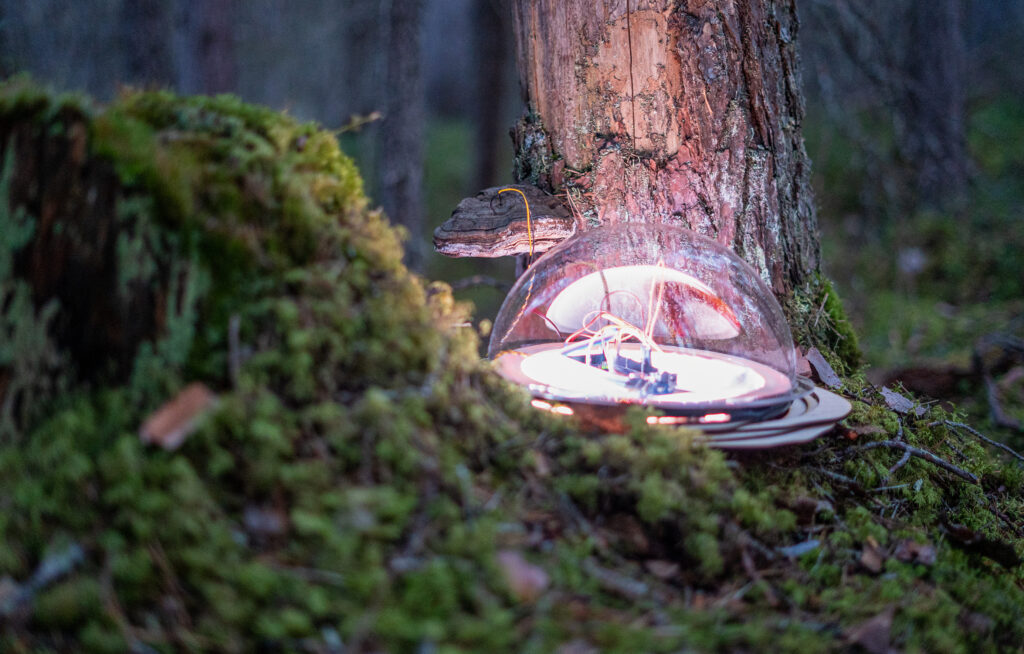
The artwork is an invitation to contemplate those patterns and forest intelligence. The artwork is also a provocation to shift machine intelligence away from human models and towards the forest. Sensing cocoons installed onto the forest floor illuminate in time with the internal signals of mosses, species of fungi, lichens and pines. Each has its own bioelectric pulse and responds to the forest and to environmental factors that stretch beyond the forest.
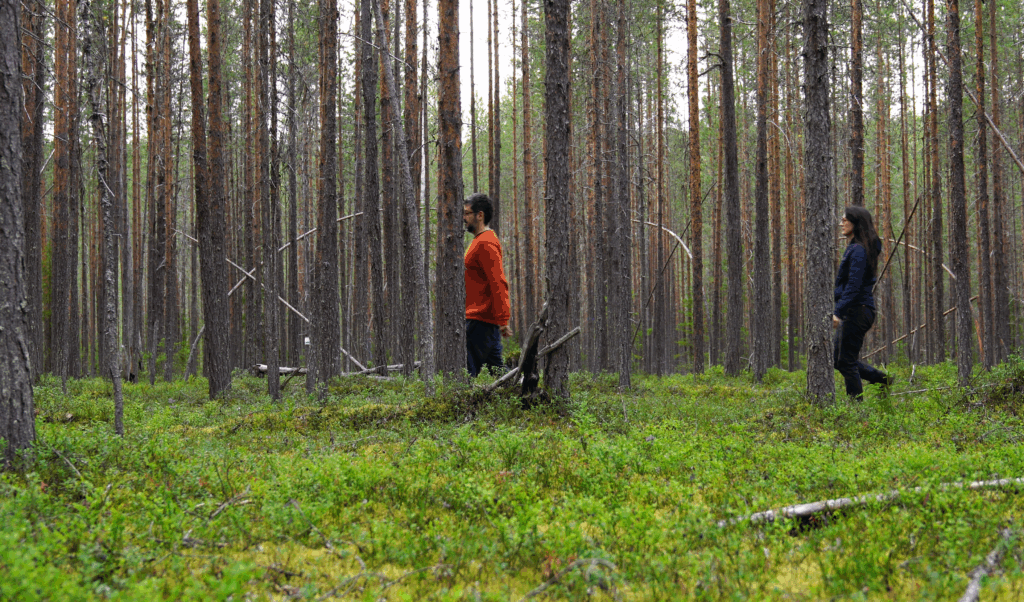
Boreal Intelligence is a study of a subarctic habitat experiencing the global climate crisis, with scientists at Oulanka Research Station contributing longitudinal research studies on different levels of the forest. It is also an artwork that is an expression of a forest, revealing signals from the intelligent beings that constitute the forest. The results challenge anthropogenic AI and the aspiration to make machines more human. During our time in the boreal forest and through this artwork, we consider this seemingly quixotic question, “How do we become a forest?” For us this question is pragmatic, and urgent.
Boreal Intelligence examines a forest as an overarching living entity, which connects us all.
bio-sensing
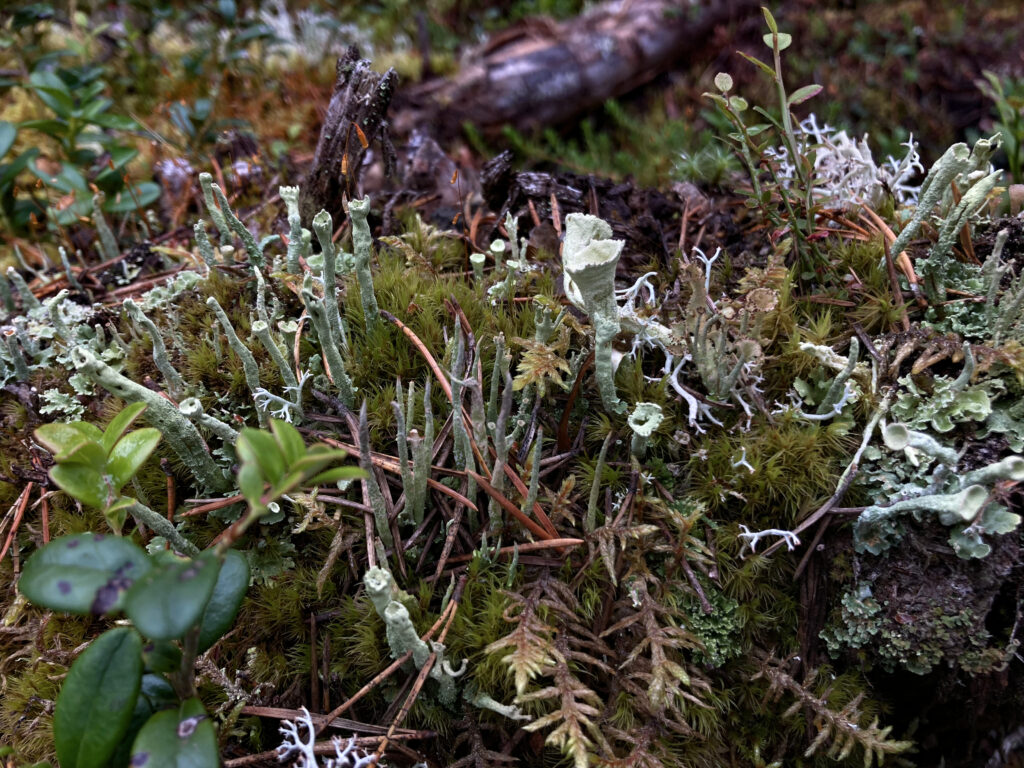
When we enter a forest, we see a multitude of different individuals coexisting. We understand on some level that these individuals are exchanging information in a network in order to fulfill their needs and in response to an external context. The individuals sending and receiving simple data through biochemical exchanges form a complex system from which emerges a range of nuanced behaviors that a forest can exhibit. While we can study this biocomplexity and even learn how this system works, our human senses cannot really perceive any of this.
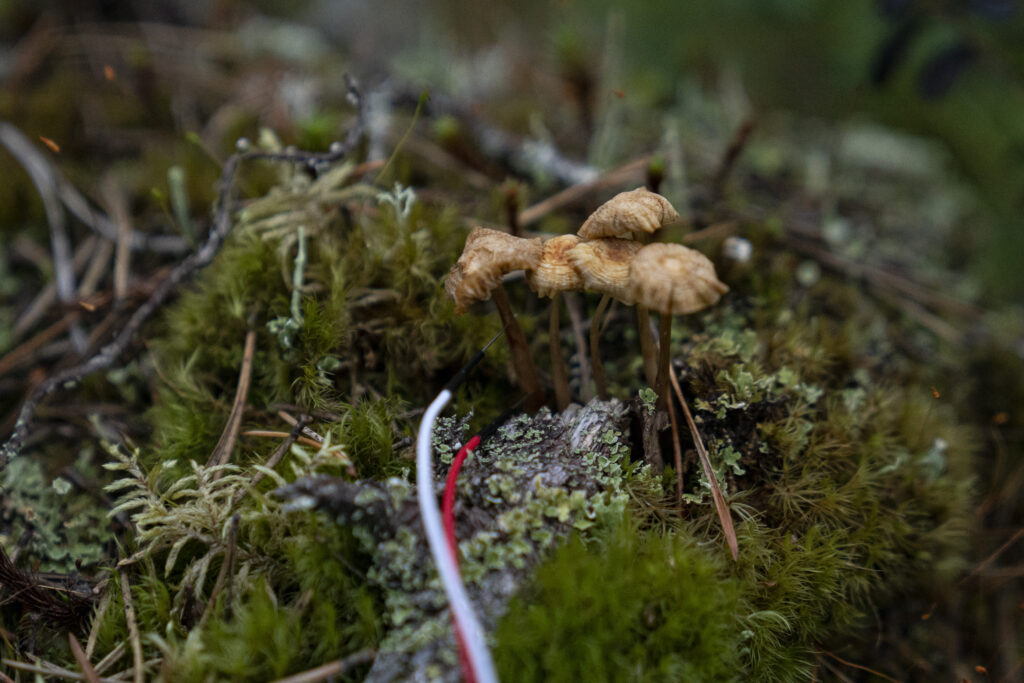
The artwork is an invitation to contemplate those patterns and forest intelligence. The artwork is also a provocation to shift machine intelligence away from human models and towards the forest. Sensing cocoons installed onto the forest floor illuminate in time with the internal signals of mosses, species of fungi, lichens and pines.
Nonhuman Data
Cesar & Lois train AI with nonhuman data to recognize patterns that do not follow human criteria or logic. The sculptures recode the forest specimens’ bioelectrical data into light pulses. Illuminating those internal patterns, the pulsing cocoons at different levels of the forest give the viewer a sense of how this nonhuman network makes the forest alive—and intelligent. Those pulses, along with real time environmental data, feed an algorithm. The AI is trained to recognize the recurrent patterns that emerge from the interactions between each forested organism and the environment. The biosignals give us a clue to the intelligence of a forest.
Acknowledgements
Cesar & Lois: artists; Antti Tenetz: project manager and a curator of the More-than-Planet project, technical and creative contributor; Taija Jyrkas: PhotoNorth project producer, additional project filmography, forest guide and physical production; Riku Paavola: Oulanka Research Station station senior researcher, environmental data overview; Juho Lämsä: Oulanka Research Station resident scientist, environmental data study and acquisition; Johannes Cunow: underground imaging and root network research, Umeå University, Department of Ecology and Environmental Science; José Augusto Mannis: Spatial sound mixing, Laboratório de Acústica e Artes Sonoras (LASom), UNICAMP; Igor Abdo Aguilar, sound artist, Laboratório de Acústica e Artes Sonoras (LASom), UNICAMP.
Boreal Intelligence was made possible through a Meander Boreal Forest lab/residency as part of More-than-Planet, in partnership with Northern Photographic Centre and co-funded by the Creative Europe program of the European Union. Oulanka Research Station was host to the project’s development and the provider of forest specimens and key research data. Cesar & Lois received additional support from CSUSM, UNICAMP and FAPESP (2023/10966-1).
